
Someone sends me a clip from their favorite fitness influencer.
One week it is: "Fasting is the best way to lose weight."
The next week: "Testosterone is dangerous."
Then: "Never eat carbohydrates."
Or: "This supplement kills inflammation."
They want to know whether the person is right.
The correct coaching answer is usually: "It depends."
It depends on the person. It depends on the dose. It depends on the goal. It depends on what problem we are trying to solve. It depends on what the intervention improves, what it makes worse, and how long we plan to use it.
Nuance is always king.
But "it depends" is not especially helpful when someone needs a simple way to evaluate an idea before they have a degree in physiology.
So I use a first-pass filter built around four concepts:
- Nuance
- Metabolic health
- Chronic inflammation
- Skeletal muscle
It is not a law. It is not a diagnosis. It is not the final answer.
It is a compass.
1. Start With Nuance

There are very few things in health that are simply good or bad.
Water is necessary for life. Too much water can kill you.
Exercise improves health. Too much exercise without sufficient recovery can break you down.
Inflammation is required for healing. Chronic inflammation can gradually destroy tissue.
Testosterone supports muscle, bone, sexual function, and metabolic health. Too little can create problems. Too much can create different problems.
The substance, exercise, diet, or treatment is only one part of the equation.
Dose matters.
Duration matters.
Timing matters.
The person matters.
The goal matters.
That is why "it depends" is usually the honest answer.
Nuance does not mean that we cannot make general judgments. It means that the general judgment is the beginning of the conversation, not the end.
2. The Main Idea Is Metabolic Health
Energy is life.
Every heartbeat requires energy. Every thought requires energy. Every immune response, muscle contraction, breath, digestive process, and repair mechanism requires energy.
Metabolism is how the body handles that energy. It is how we obtain energy, convert it, store it, move it, and use it.
When people hear "metabolism," they usually think about how many calories they burn or whether they gain weight easily.
That is a tiny piece of it.
Metabolic health is the body's ability to manage energy without constantly damaging itself in the process.
- Can glucose move out of the blood and into the tissues that need it?
- Can stored energy be accessed when required?
- Can the body produce enough energy to train, recover, think, heal, reproduce, and fight illness?
- Can it switch between fuel sources?
- Can it tolerate stress without the entire system falling apart?
A metabolically healthy body handles energy well.
A metabolically unhealthy body has energy available, but cannot efficiently store, distribute, or use it. The fuel may be present, but the machinery cannot process it correctly.
That is why obesity, diabetes, cardiovascular disease, fatty liver disease, and even some forms of cognitive decline are not entirely separate conversations. They frequently involve failures in how energy is handled.
The details differ, but the larger theme remains: the system is struggling to manage fuel.
3. First Macro: Chronic Inflammation
Inflammation itself is not the enemy.
Acute inflammation is part of the body's normal response to training, injury, infection, and tissue repair.
If you train hard, some inflammation follows. If you cut your hand, inflammation helps begin the healing process. If you are exposed to an infection, inflammation helps mobilize the immune response.
That is normal.
Chronic inflammation is different.
Chronic inflammation means the alarm keeps ringing. The immune system remains activated. Tissues remain irritated. Normal signaling becomes disrupted. Repair processes never fully shut off.
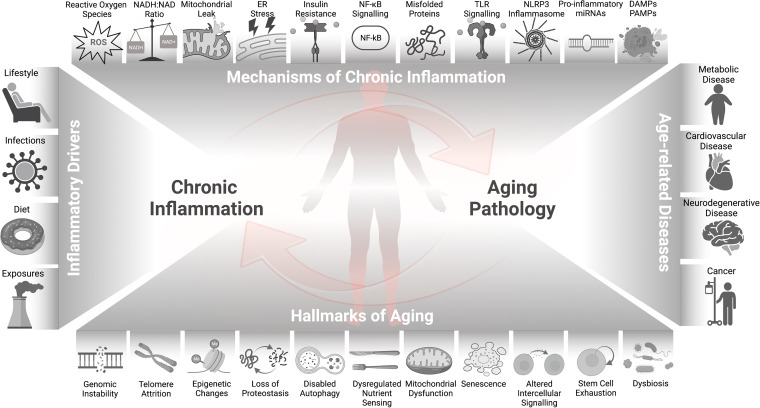
Across many common chronic diseases, inflammation keeps appearing somewhere in the chain.
It may not be the original cause. Sometimes inflammation helps cause the problem. Sometimes the disease produces the inflammation. Sometimes they drive each other in a cycle.
But it repeatedly appears in obesity, insulin resistance, diabetes, cardiovascular disease, autoimmune disease, and neurodegenerative disease. Chronic low-grade inflammation is closely connected with metabolic dysfunction and impaired insulin action in tissues such as skeletal muscle.
So the first question is simple:
What does this do to chronic inflammation?
Does it reduce the long-term inflammatory burden? Does it make the inflammatory environment worse? Does it fix the cause, or does it merely hide a symptom? And are we discussing chronic inflammation or a useful acute response?
That last distinction matters.
Using an intervention to control acute pain after an injury is not the same as relying on it every day while the underlying problem continues to worsen.
A fire extinguisher is useful when something is burning. Living inside a building that is permanently full of smoke is a different problem.
4. Second Macro: Skeletal Muscle
The second question is:
What does this do to skeletal muscle?
Does it build muscle? Does it preserve muscle? Does it cause muscle loss? Does it leave the person stronger and more capable, or lighter and weaker?
Skeletal muscle is not JUST decoration. It is metabolic tissue.
It is one of the primary places where glucose is cleared from the bloodstream and used or stored. Skeletal muscle is the principal tissue responsible for insulin-stimulated glucose disposal, making it central to whole-body glucose regulation.
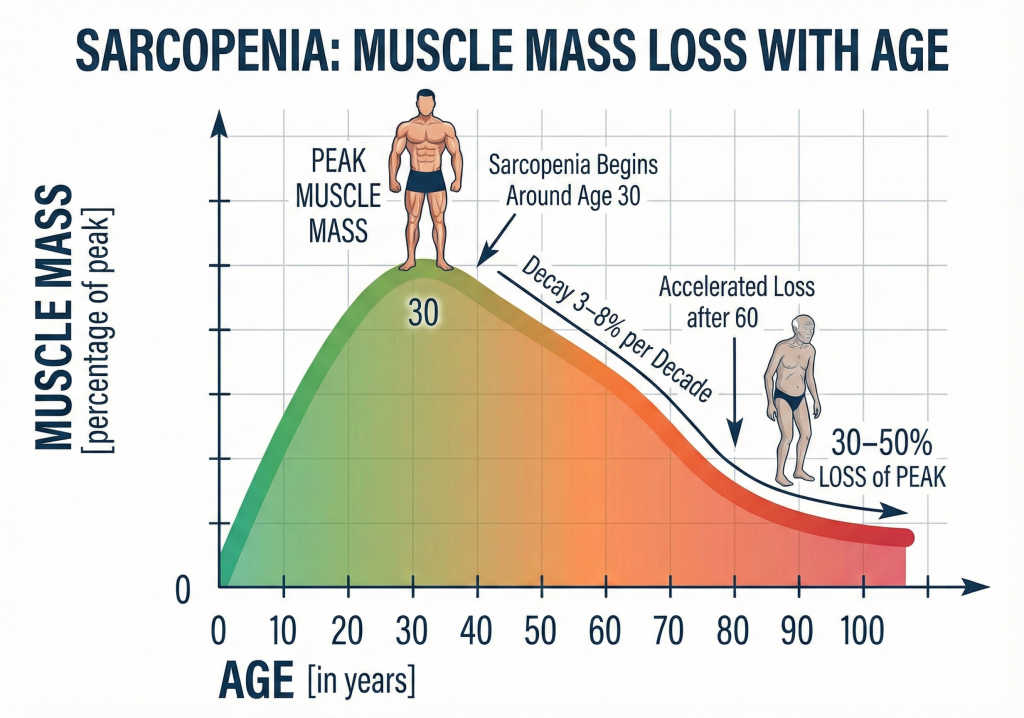
Muscle is also physical reserve.
It helps you stand up, walk, climb stairs, catch yourself when you fall, tolerate illness, recover from surgery, and remain independent as you age.
The more functional reserve you have, the more capacity you can lose before ordinary life becomes difficult.
That is why measures of muscular strength and physical performance track so strongly with disability and mortality. In large observational studies, lower grip strength has been associated with higher all-cause and cardiovascular mortality. Walking speed also predicts disability and survival in older adults.
Muscle mass is the structure. Strength and physical performance show us how well that structure works.
For a first-pass filter, however, the question remains easy: is this helping us keep useful skeletal muscle, or is it stripping it away?
The Two-Question Test
Once metabolic health is established as the central idea, the first-pass test becomes:
- What does this do to chronic inflammation?
- What does this do to skeletal muscle?
That is it.
If an intervention reduces chronic inflammatory burden while building or preserving skeletal muscle, it is probably moving the person in a productive direction.
If it improves one but harms the other, the answer becomes: "It depends."
If it worsens both, it is usually moving the person in the wrong direction.
Then we apply nuance.
Example One: Resistance Training
Resistance training temporarily increases acute inflammation.
Someone could look at that response and conclude that resistance training is inflammatory and therefore unhealthy.
That would be a failure to apply nuance.
The short-term inflammatory response is part of the signal that initiates repair and adaptation.
Over time, properly managed resistance training builds skeletal muscle, improves glucose handling, increases physical capacity, and may reduce markers of chronic low-grade inflammation in some populations.
- Chronic inflammation: generally improved over time.
- Skeletal muscle: improved.
- First-pass result: good.
Nuance: training volume, exercise selection, injury status, sleep, nutrition, and recovery still matter.
Example Two: Rapid Weight Loss
A person loses 40 pounds.
Everyone congratulates them because the number on the scale went down.
But what did they lose?
If they lost substantial visceral fat, reduced blood glucose, improved blood pressure, and preserved most of their skeletal muscle, the outcome may be favorable.
If they starved themselves, stopped training, lost significant muscle, and became weaker, the scale may look better while their functional reserve became worse.
- Chronic inflammation: potentially improved through fat loss.
- Skeletal muscle: potentially harmed.
- First-pass result: "It depends."
This is why weight loss and improved health are not automatically the same thing. A smaller body is not necessarily a healthier body.
Weight loss that destroys muscle can become the metabolic equivalent of selling the furniture to pay the electric bill. The bill is paid today, but the house is less useful tomorrow.
Example Three: Pain Medication
Pain medication can reduce pain and inflammatory symptoms. That may be appropriate after an acute injury or procedure.
But reducing the sensation of pain does not necessarily repair the damaged tissue, correct poor movement, restore strength, or resolve the condition creating the pain.
- Chronic inflammation: possibly reduced or masked.
- Skeletal muscle: potentially unchanged, indirectly preserved, or indirectly lost depending on whether the person resumes useful activity or simply avoids solving the problem.
- First-pass result: "It depends."
The medication may be a useful tool. It is not automatically the complete solution.
Example Four: Testosterone
Testosterone makes the filter easy to visualize.
Too little testosterone can contribute to reduced muscle mass, poorer body composition, reduced training capacity, and a less favorable metabolic environment.
Excessive testosterone can strongly promote muscle growth but may introduce other health costs.
An appropriate amount can support skeletal muscle and metabolic function without creating the same degree of dose-related burden.
Low testosterone
- Chronic inflammation and metabolic health: potentially worse
- Skeletal muscle: worse
Very high testosterone
- Chronic inflammation and systemic burden: potentially worse
- Skeletal muscle: strongly improved
Appropriate testosterone
- Chronic inflammation and metabolic health: potentially improved
- Skeletal muscle: improved
First-pass result: low is generally bad. Appropriate is generally best. High becomes "it depends."
The first-pass filter gives us the direction. The individual's health, dose, monitoring, goals, and response determine the final answer.
Nuance remains king.
A Simple Story About Two Older Adults

Imagine two 75-year-old men. They weigh exactly the same.
The first man has spent the last 30 years avoiding physical effort. He has little skeletal muscle. He struggles to stand from a low chair. He walks slowly. A minor illness leaves him confined to bed for a week, and he never fully regains his previous function.
The second man has continued lifting weights, walking, eating sufficient protein, and maintaining his physical capacity. He still gets sick. He still ages. He still loses some strength over time.
But he begins with more reserve.
The same illness takes something from both men. The difference is how much they had available to lose.
That is one of the most important functions of muscle.
Muscle is stored independence.
Muscle is stored resilience.
Muscle is stored capacity.
The goal is not merely to avoid death. The goal is to remain capable while alive.
The Filter Is Not the Final Answer
This framework will not solve every medical question.
Cancer can break the pattern. Certain autoimmune diseases can complicate it. Some treatments may temporarily reduce muscle or increase inflammatory stress because they are necessary to control a greater threat. Some people may need short-term interventions that fail one or both filters.
That is where nuance returns.
The filter is not designed to replace clinical reasoning. It is designed to help people ask better questions before blindly repeating whatever an influencer said into a camera.
Start with metabolic health. Remember that energy is life and metabolism is how the body handles energy.
Then ask: what does this do to chronic inflammation? What does this do to skeletal muscle?
If it improves both, it probably deserves attention. If it harms both, it probably deserves skepticism. If it improves one and harms the other, the answer is probably: "It depends."
And that is where the real conversation begins.
References
Research supporting the claims referenced above:
- Leong DP, et al. Prognostic value of grip strength: findings from the Prospective Urban Rural Epidemiology (PURE) study — The Lancet, 2015
- Studenski S, et al. Gait speed and survival in older adults — JAMA, 2011
- DeFronzo RA, Tripathy D. Skeletal muscle insulin resistance is the primary defect in type 2 diabetes — Diabetes Care, 2009
- Wu H, Ballantyne CM. Skeletal muscle inflammation and insulin resistance in obesity — Journal of Clinical Investigation, 2017
- Sardeli AV, et al. Effect of resistance training on inflammatory markers of older adults: a meta-analysis — Experimental Gerontology, 2018
- A systematic review on type 3 diabetes: bridging the gap between metabolic dysfunction and Alzheimer's disease — 2025
Train at GYM N°5
Private strength training in Gunbarrel, Boulder. Powerlifting, Olympic weightlifting, strongman, physique, and athletic performance. 24/7 member access.